


The founding story: fixing code review before it breaks teams
CodeRabbit was founded in early 2023 by Harjot Gill and Guritfaq Singh, two experienced engineers who saw a problem most development teams silently suffer through with a simple but painfully familiar observation: code review is one of the most important parts of software development, and also one of the most broken.
As engineering teams scaled, pull requests got larger, review cycles got slower, and feedback quality became inconsistent. Senior engineers were stretched thin, junior engineers waited days for responses, and critical issues slipped through because reviewers were overloaded or context switching.
The founders saw this firsthand. Code review was supposed to improve quality and collaboration, but in practice it had become a bottleneck. Instead of helping teams move faster, it slowed them down.
So they asked a straightforward question: what if AI could take the first pass?
Not to replace human reviewers, but to handle the repetitive, time consuming, and obvious parts of review so engineers could focus on judgment, architecture, and real decision making.
That question became CodeRabbit.

What CodeRabbit actually does
At its core, CodeRabbit is an AI-powered code review assistant that plugs directly into a team’s existing development workflow.
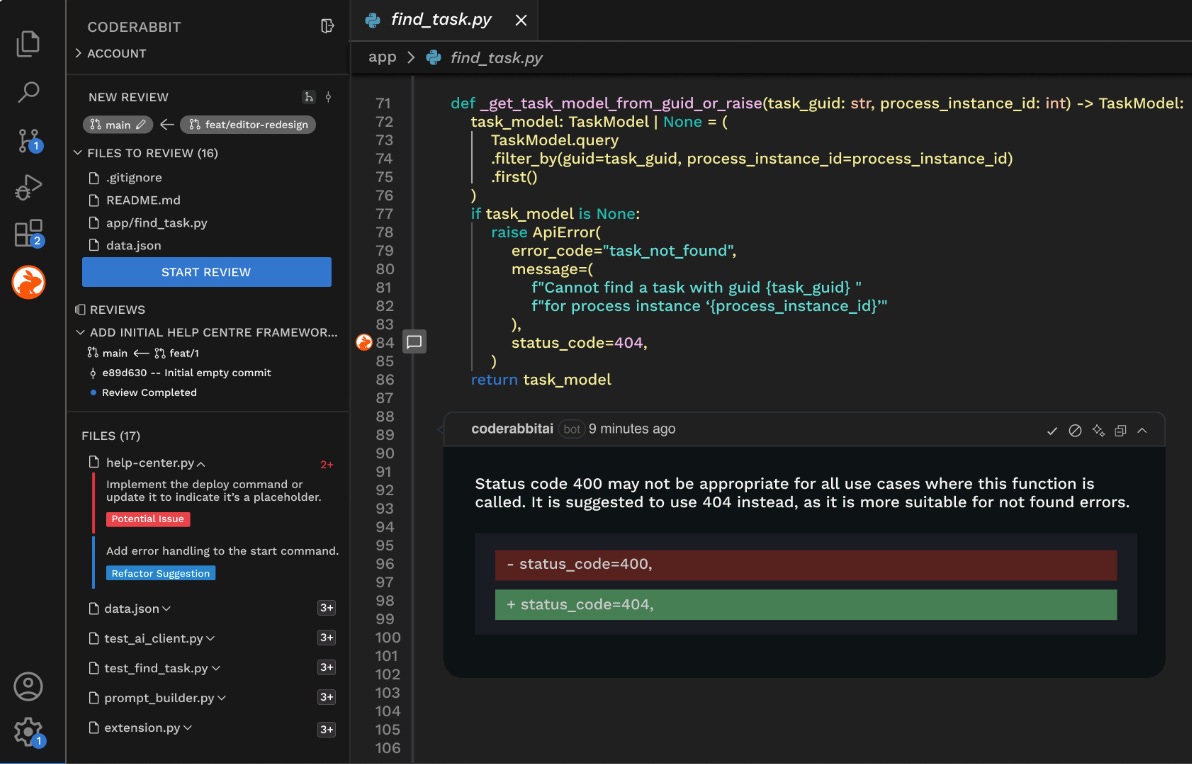
When a pull request is opened, CodeRabbit automatically reviews the changes and provides inline feedback across areas like:
Bugs and logical issues
Code quality and readability
Security risks
Performance considerations
Best practices and style consistency
Instead of waiting hours or days for initial feedback, developers get immediate, contextual comments right inside their pull request.
What makes CodeRabbit different is how opinionated and conversational the feedback feels. It does not just flag issues. It explains why something might be problematic, suggests alternatives, and adapts to the language and patterns used by the team.
The result is faster reviews, fewer back and forth cycles, and cleaner code before a human even touches the PR.
For engineering managers, it means shorter review queues and more consistent standards. For developers, it means learning happens in real time, not after a mistake ships.
Why AI code review is having a moment
Modern engineering teams move fast. Continuous deployment, microservices, and remote collaboration all increase the volume of code shipped every day.
But code review has not scaled at the same pace.
Most teams rely on a handful of senior engineers to maintain quality across dozens of repositories. That creates burnout and blind spots. CodeRabbit steps into that gap by acting as a first line of defense.
It does not replace human judgment. It augments it.
By catching common issues early, CodeRabbit allows humans to spend their time on higher leverage questions like system design, tradeoffs, and long term maintainability.
In a world where AI is being pushed into everything, this is one of the most practical use cases. It removes friction without getting in the way.

Funding and team at a glance
💰 Raised a $60M (valued at $550M) Series B backed by Scale Venture Partners
👥 100+ employees across the globe
🌎 Based in California, with presence in Bengaluru, India
🖥️ Website: coderabbit.ai
The competition and how CodeRabbit compares
CodeRabbit operates in the fast growing developer productivity and AI tooling space. Adjacent players include:
GitHub Copilot, focused on code generation
Amazon CodeWhisperer, embedded in AWS ecosystems
Static analysis tools like SonarQube, focused on rule based scanning
Where CodeRabbit stands apart is in review, not generation.
Instead of helping you write code, it helps you evaluate it.
That positioning matters. Generated code still needs review, and static tools often lack context. CodeRabbit lives directly inside the pull request, understands the diff, and speaks the language of developers.
It feels less like a scanner and more like a teammate who never gets tired.
Viral growth through UGC
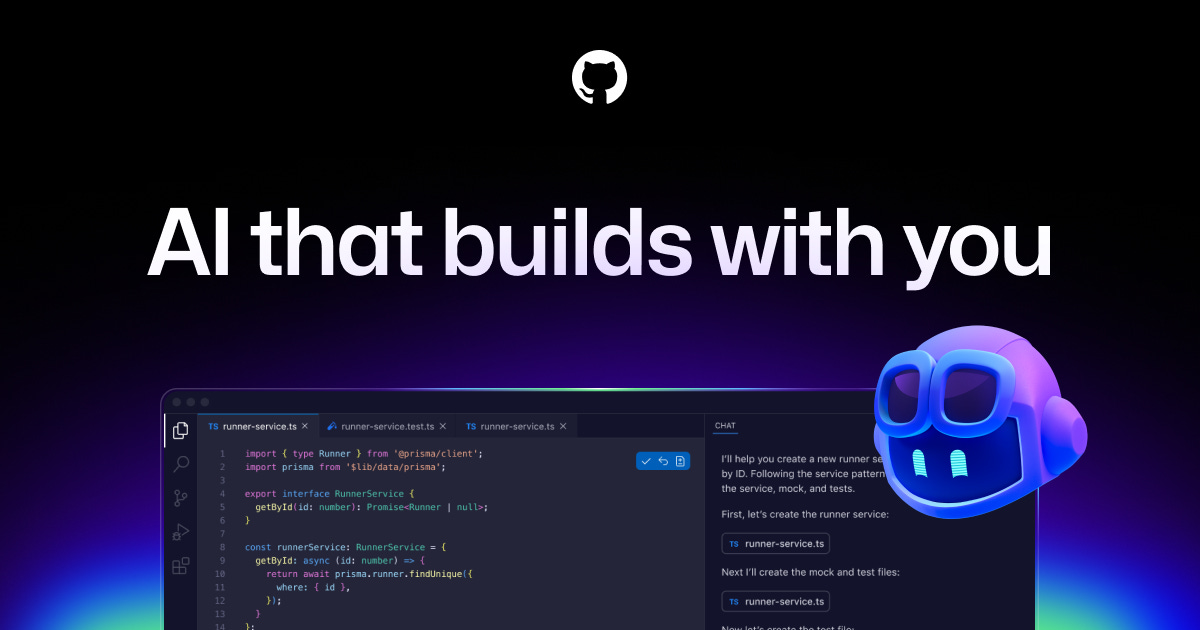
Funny enough, I actually found CodeRabbit the same way a lot of developers are discovering new tools right now: TikTok. Creators like @the_varunrana have been sharing real pull requests, real code reviews, and real reactions to CodeRabbit catching issues they would have otherwise missed. It feels authentic, not scripted.
What’s smart is how naturally CodeRabbit fits into this format. The product is visual, opinionated, and easy to demo, which makes it perfect for short-form content. Instead of polished marketing, you’re seeing the tool in action inside real developer workflows, which builds trust fast.
This UGC-first motion is a huge advantage. Developers trust other developers, and CodeRabbit has positioned itself right where those conversations already happen. It’s less “here’s our product” and more “here’s how this actually saves me time,” which is exactly why it’s spreading.
Giving back to open source: a $1M commitment
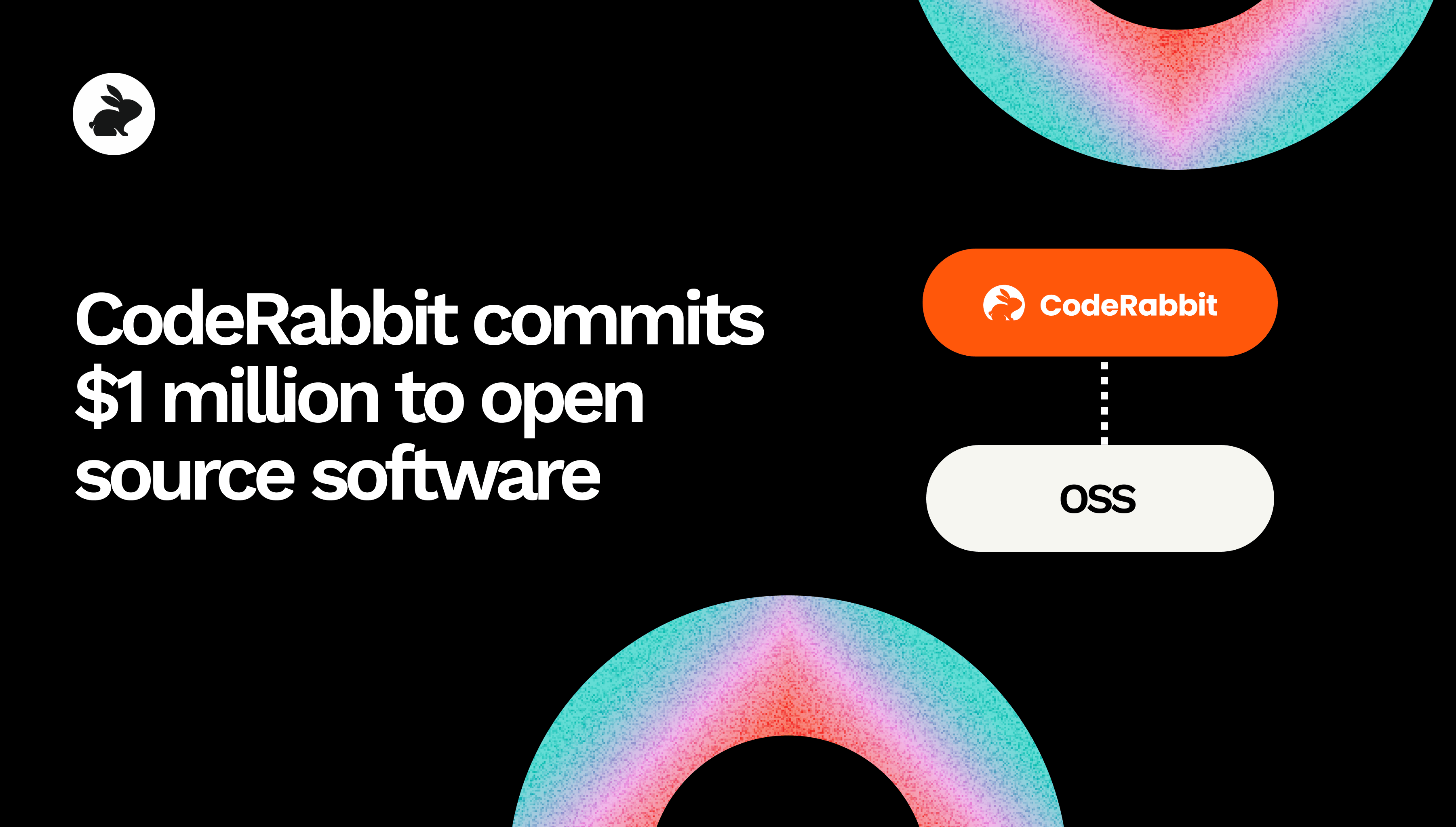
CodeRabbit recently announced a $1 million commitment to open source, and it’s one of the more thoughtful moves I’ve seen from a young developer tools company.
The idea is simple. Open source software powers modern engineering, but the people maintaining it are often underfunded, overworked, and invisible. CodeRabbit is putting real money behind supporting maintainers, projects, and communities that form the backbone of the developer ecosystem.
Instead of treating open source as a marketing checkbox, they’re treating it as infrastructure. The commitment is meant to fund maintainers directly, sponsor critical projects, and help sustain the tools engineers rely on every day. It also aligns closely with CodeRabbit’s own mission. Better code review only works if the broader ecosystem stays healthy.
For a company building in developer tooling, this move builds a lot of goodwill. It signals long-term thinking, respect for the community, and an understanding that great software does not exist in isolation.
My take
CodeRabbit is tackling a problem every engineering team understands but few have solved well.
Code review is critical, but it is also one of the biggest sources of friction in shipping software. By automating the obvious and accelerating feedback loops, CodeRabbit gives teams something rare: speed without sacrificing quality.
What I like most is that it respects the human in the loop. It does not pretend AI can replace judgment. It simply removes the noise so judgment can matter more.
If you care about developer productivity, engineering culture, or building scalable teams, CodeRabbit is absolutely worth watching. This is one of those tools that quietly becomes indispensable once it is in place.
🧭 CodeRabbit Roles
These are some pretty cool roles at CodeRabbit at the moment. I encourage you to keep in tune with future LaunchPad job posts to see any new exciting roles that pop up at CodeRabbit and many other cool firms!
That’s a wrap on Spotlight #24
If you made it this far, thank you for reading! I hope these spotlights help you discover companies worth your time, and make the job hunt feel just a little bit less overwhelming. Keep an eye out for next Tuesday’s LaunchPad job drop, and if you know someone looking to break into tech or level up, feel free to share this with them too.
Here’s to building something cool, or better yet, joining something cool. 🚀
